£0.00


Choosing the Right Fire for Your Home: Expert Advice from One of Our UK Suppliers
Selecting the perfect fire for your home isn’t just about warmth—it’s about creating a focal point that enhances your space, suits your lifestyle, and fits seamlessly with your home’s character. With so many options available, from traditional wood-burning stoves to sleek electric and gas models, making the right choice can feel overwhelming.
To help you make an informed decision, we’ve partnered with one of our trusted UK suppliers to share their expert insight into what really matters when choosing a fire. Their advice covers everything from style and efficiency to installation considerations and long-term maintenance—ensuring you find a fire that’s not only beautiful, but right for your home and your needs.
A fire has always been the heart of a home. Whether you live in a city flat, a new‑build townhouse or an old stone cottage, a fire creates warmth, atmosphere and a focal point. Modern homeowners, however, face a wider range of choices than ever before. Traditional open fires are being replaced by high-efficiency wood-burning stoves, gas fires, and electric fires that meet Ecodesign regulations and reflect growing environmental awareness. The team at Charlton & Jenrick manufactures all three fuel types, alongside a wide range of fireplace surrounds made from marble, limestone, and other materials. In this guide, we explore the benefits, aesthetics, and practical considerations of each fire type, and suggest fireplace styles suited to different house designs, installation constraints, and personal preferences.
Comparing Fires:
Wood‑burning stoves: self‑sufficiency and reduced emissions
Modern wood-burning stoves are very different from the old, inefficient stoves of the past, or worse still, open fires. Our range of Pure Vision stoves and Fireline stoves were among the first to meet the Ecodesign 2022 standards years before the 2022 deadline and hold ClearSkies Level 4 or 5 certification. These certifications indicate that the stoves achieve high fuel efficiencies and extremely low particulate emissions, reducing pollutants by up to 90% compared to open fires and 80% compared to older stoves. Our stoves use advanced combustion and air‑wash technology, which cleans the glass and ensures complete burning of gases. All our models are DEFRA‑exempt, meaning they can be used in UK smoke control areas. A key advantage is independence: burning locally (ideally) sourced, seasoned wood reduces reliance on electricity or gas networks and supports sustainable woodland management.
Practical considerations include:
Fuel quality – only burn dry, seasoned wood to minimise smoke and maximise heat. Using damp wood causes creosote build‑up and higher emissions.
Installation – Wood-burning stoves require a chimney or flue system, and the flue must be swept regularly. Many stoves can be fitted into existing fireplace openings; freestanding models often stand proudly in rooms with an exposed flue.
Heat output – Our models cover outputs ranging from 4kW to 8kW, suitable for spaces from a small cottage room to a large open-plan area.
Maintenance – empty ash, clean the glass and have the stove serviced annually. Replace door seals and fire bricks when necessary.
When installed correctly and burned with seasoned logs, a wood‑burning stove provides lively flames and tangible warmth. For homeowners seeking resilience against rising energy prices and the pleasure of a real fire, this remains a desirable choice.
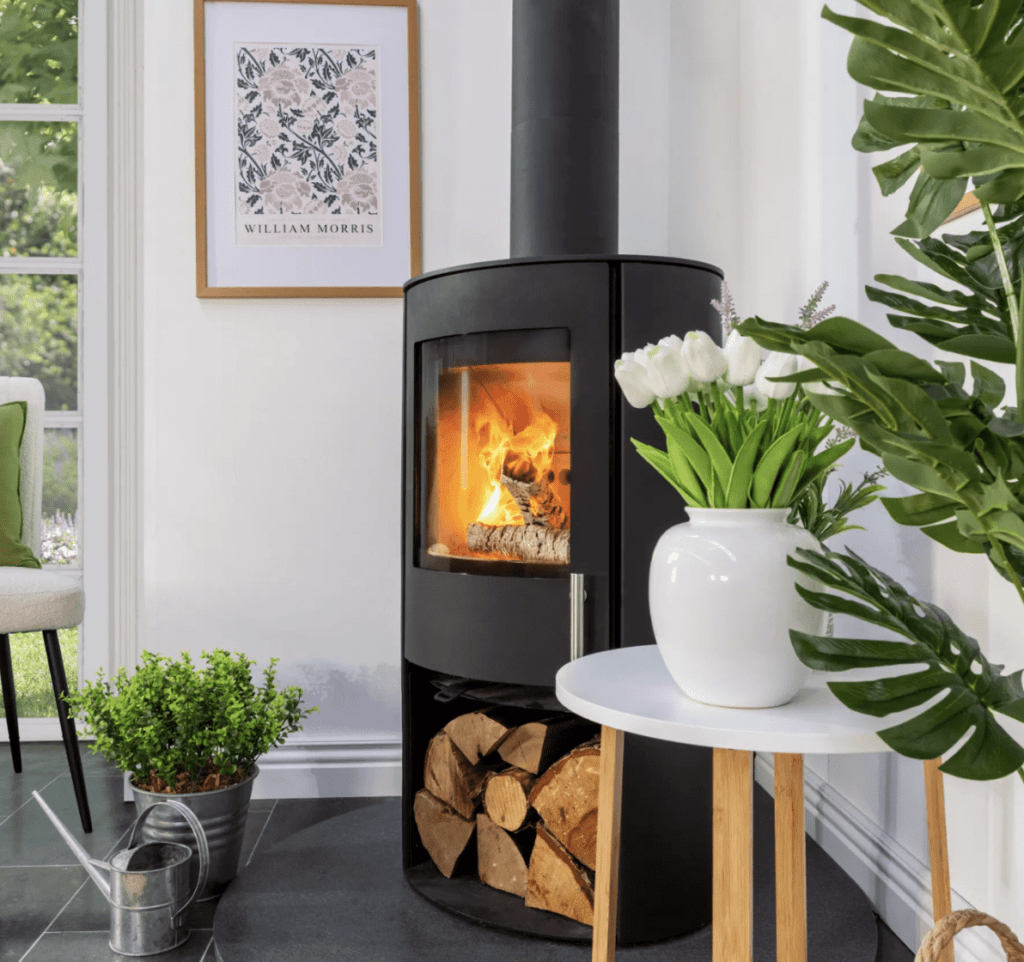
Below is our Woodtec FCS Cylinder Wood-Burning Stove:
Gas Fires – Efficient heat and instant control
Gas fires offer real flames at the flick of a switch and are available in open‑fronted and glass‑fronted designs. C & J have developed a range of gas models that greatly improve efficiency and are perfect for a wide range of homes. Compared with open‑flame gas fires that draw warm room air up the chimney, glass‑fronted fires reduce air changes from roughly 12 per hour to around one per hour. Balanced‑flue fires are completely sealed from the room and use a twin‑pipe system to draw air from outside and expel exhaust gases; they can even be installed without an existing chimney. The result is higher heat retention, lower running costs and less draught.
Several models illustrate these advantages:
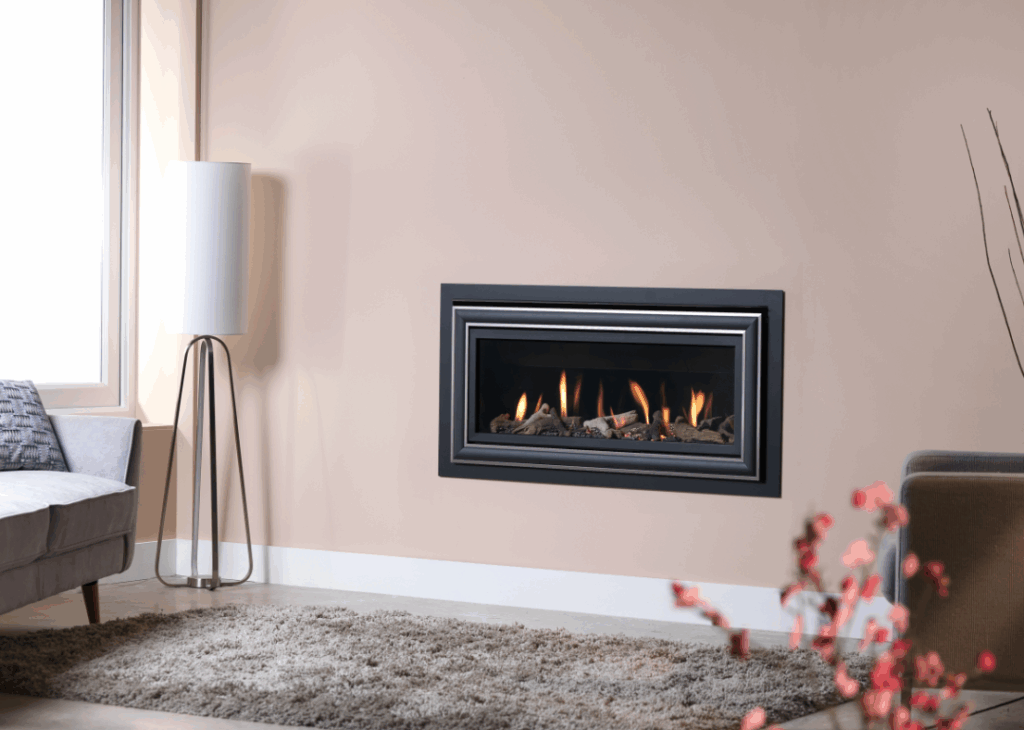
Infinity 890HD Balanced Flue – (below) a landscape hole‑in‑the‑wall gas fire delivering 4.9kW of heat from a 6kW input and achieving 91% efficiency to BS EN 613 standards. Its high‑definition log set, thermostatic remote control and multiple installation options (frameless, limestone slips or zero‑clearance kit) make it ideal for contemporary living rooms.
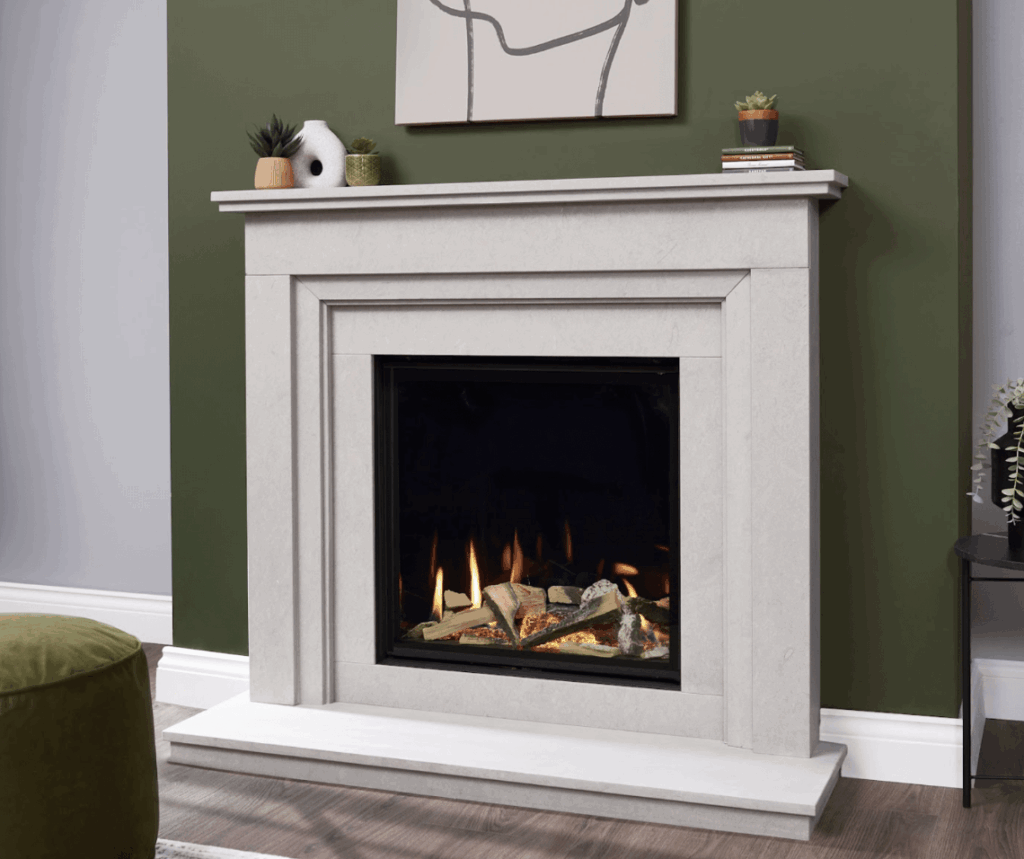
Paragon P5 CF – (below) a conventional‑flue gas fire producing 5.7kW of heat with 85% net efficiency. It features Bluetooth remote control, a choice of ceramic liners and high‑definition logs. The size of the P5 allows for installation into the majority of chimney breasts without the need for additional building work. This size is also perfectly proportionate to fit with the popular 54” fireplace designs that are available from all fireplace retailers.
C & J were among the first UK manufacturers to test our gas fires for hydrogen blend readiness, meaning many models can run on a 20% hydrogen mix without modification. For households that already have a gas supply and want high heat output with minimal maintenance, a balanced-flue gas fire offers efficiency, convenience, and future-proofing.
Electric fires: flexibility and low‑carbon operation
Gone are the days when an electric fire was the last option if you could not install a gas or solid fuel appliance. Modern electric fires are often the first choice for customers who want ease of use and the latest technology. Electric fires have evolved dramatically.
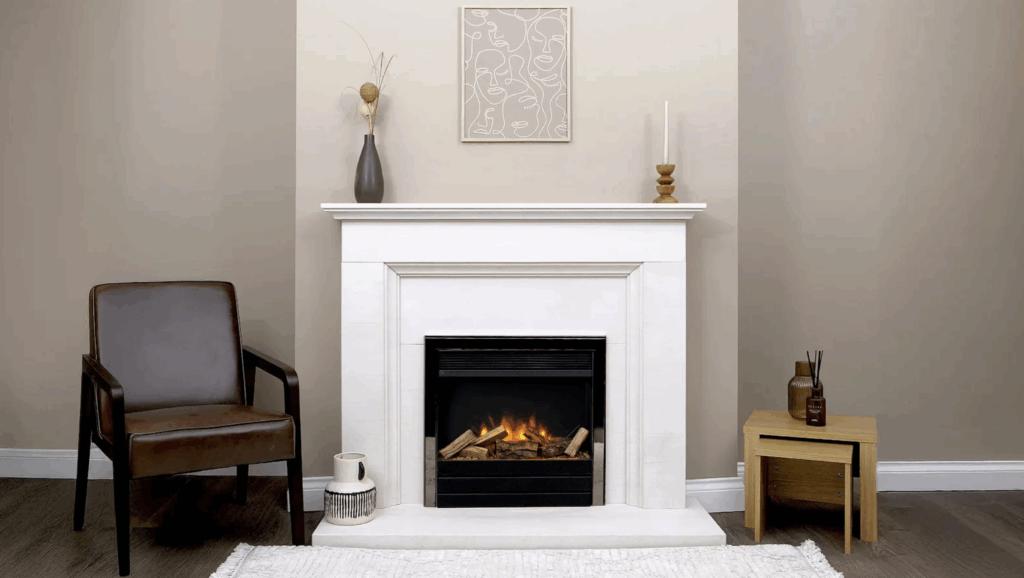
4D Ecoflame 22″ Maxi – (below) is a new-to-range fire. Building on the success of the 4D Ecoflame 22” range, the 22” Maxi electric fire adds our new Real Oak Premium Log Set and a new range of fascias.
This fire fits into a standard 16” fireplace opening with the included spacer fitted. By removing the spacer, the fire will fit flush into a wider 22” opening. There is a choice of two fascia options, in either chrome or black. Allowing you to find the perfect style for your home.
Modern electric fires offer:
Realistic visuals – Real Flame and LiveFlame technologies offer multiple flame and fuel-bed colour options, along with ambient lighting colours. Log fuel beds, ice-crystal beds, and crackle-sound effects create a convincing illusion of a real flame.
Smart control – many fires feature remote thermostats, seven‑day timers and app control via Wi‑Fi, along with open‑window detection that switches the heater off if a sudden drop in temperature is detected
Easy installation – hang-on-wall models come with brackets, and deep fires, such as the iRange i1500e Deep, can be installed as one, two, or three-sided displays in a feature wall.
Minimal maintenance – there is no flue, glass cleaning or ash removal. Servicing is virtually non‑existent, and running costs are predictable if you know the electricity tariff you are on; just be aware of the usage, as it can add up rather quickly.
Choosing The Right Fireplace:
Limestone: understated warmth and versatility:
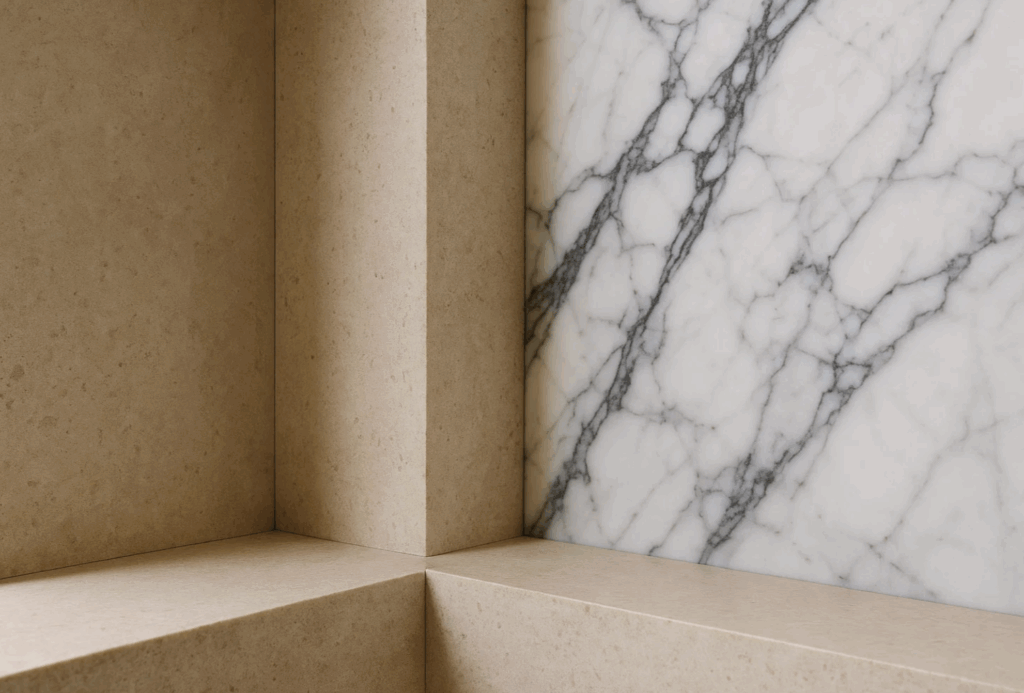
Limestone is a sedimentary rock formed from compressed marine sediments. In fireplaces, it has a creamy palette of beige, grey or off‑white, sometimes streaked with subtle fossils. Because it is porous, it can be honed to a smooth finish or left with a soft, tactile texture. It has been used in homes since medieval times and remains popular today for its understated warmth and adaptability.
We use Portuguese limestone, each piece cut differently to reveal unique grain patterns. Limestone fireplaces suit a wide range of interiors, from rustic cottages to modern minimalist rooms, and the neutral tones pair well with wood floors and pastel walls. They are generally more affordable than marble but require sealing to prevent staining and periodic cleaning.
Marble: polished luxury and dramatic veining:
Marble is a metamorphic rock that starts life as limestone. Under extreme heat and pressure, it recrystallises, producing the crystalline sheen and dramatic veining that define marble fireplaces. Colours range from pure white and black to striking greens or reds, and the stone takes a high polish that reflects light and emphasises the fire’s glow. Marble is denser and harder than limestone, making it very durable; its association with Victorian grand houses and classical mansions adds a sense of luxury. However, marble is more expensive and still needs sealing because it remains somewhat porous.
Limestone versus marble: which to choose?
Both materials are non-combustible and can withstand the radiant heat of stoves and fires. Limestone’s subtle colouring and textured finish create a relaxed, organic feel, matching rustic or Scandinavian décor. Marble, with its bold veining and reflective surface, makes an eye-catching focal point and works well in both refined and modern settings.
When deciding, consider:
Visual impact – choose limestone for understated elegance or marble for a statement piece.
Maintenance – both need periodic sealing; marble hides soot better, while limestone may show staining if not sealed.
Cost – limestone is typically more affordable; marble commands a premium.
Compatibility with fuel type – both are suitable for wood, gas, and electric fires; ensure the surround complies with the manufacturer’s clearance distances.
Fireplace Styles and Installation Options
Inglenook fireplaces: historic charm with modern efficiency
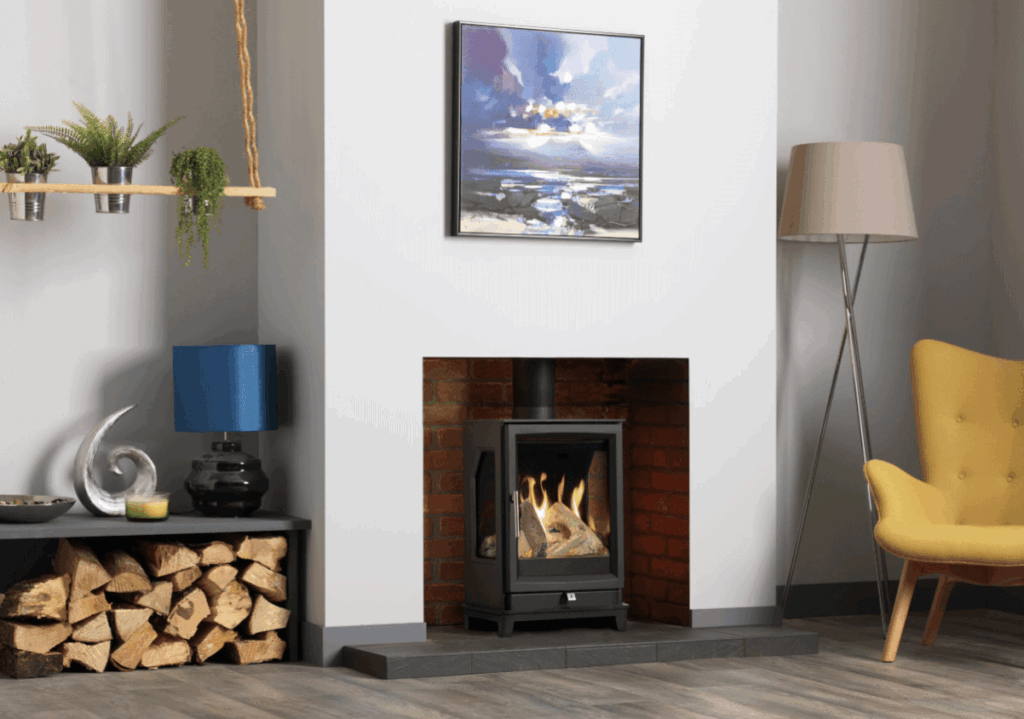
An inglenook is a large recessed fireplace found in cottages and manor houses. Historically, it featured an open fire with benches built into its sides, allowing people to sit and warm themselves. Today, the design is revived by often fitting a high‑efficiency Ecodesign stove inside the recess, creating a traditional look while significantly reducing emissions. A typical inglenook might incorporate brick or stone interior walls, an oak beam across the opening, and a flagstone or tiled hearth. Designers sometimes leave the interior plastered and painted to contrast with a black stove or line it with steel or glass panels.
When installing a stove in an inglenook:
Choose the right stove size; oversizing leads to overheating a room. Your retailer can advise on kilowatt requirements.
Consider a twin-wall flue liner to enhance chimney draft and minimise heat loss. Keep combustible materials (such as wooden beams) at the recommended clearance.
Inglenook fireplaces suit traditional properties and cottages, providing a rustic focal point. They can also be created in new builds using modern materials to evoke character. Although most incorporate wood‑burning stoves, gas or electric stoves can be used where convenience is prioritised.
Below is the Paragon Edge 3S CF gas stove, sitting in a small inglenook fireplace. Inglenooks can vary hugely in size.
Hole‑in‑the‑wall / Inset fires: sleek and minimalist
In a hole‑in‑the‑wall design, the firebox is installed flush with the wall so that only the flame picture is visible. This eliminates the need for a protruding mantel and suits contemporary interiors.
Hole‑in‑the‑wall fires may be:
Gas fires – available as open‑fronted, glass‑fronted or balanced‑flue models. Glass-fronted and balanced-flue versions offer the highest efficiency and can be installed at eye level for a modern, artwork-like appearance. The Infinity 890HD Balanced Flue mentioned earlier is a prime example.
Electric fires – deep units like the iRange i1500e can be fitted into stud walls to create frameless displays, often with hidden ambient lighting.
Inset wood‑burning stoves – Ecodesign inset stoves provide the efficiency of a stove with a flush fit. They are perfect for smaller rooms where hearth space is limited.
Hole‑in‑the‑wall fires should be installed at a comfortable height for seated viewing and may or may not require a hearth, depending on local building regulations and fuel type. They are ideal for modern flats and new-build homes that seek a clean, uncluttered look.
Below is a Fireline FPi5W Inset Stove:

Hang-on-wall and media wall fires:
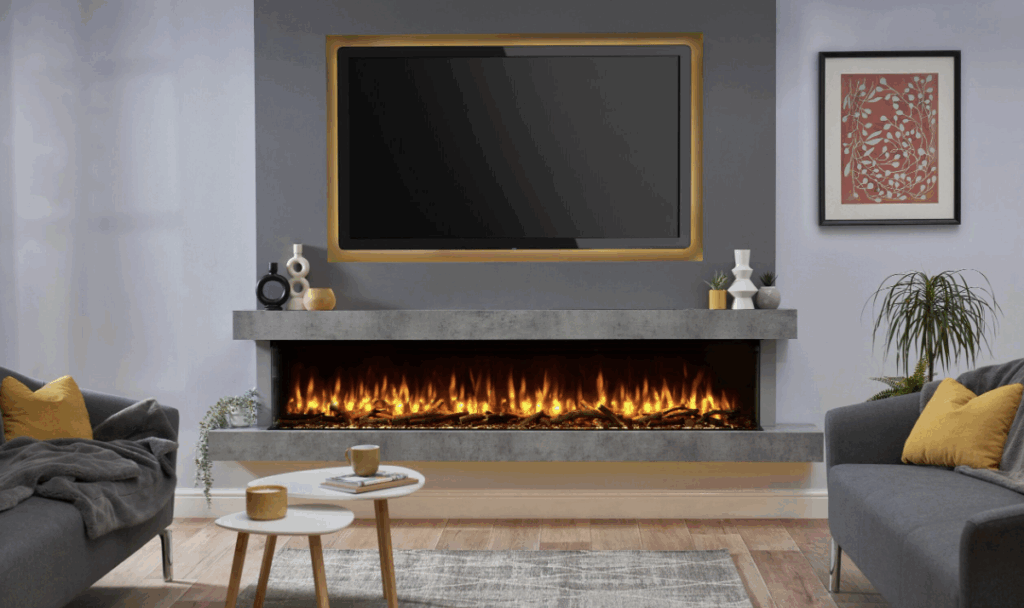
For maximum flexibility, hang‑on‑wall electric fires use brackets to fix the fire directly to the wall without the need for a chimney breast. They can be paired with floating shelves or cabinets and are particularly popular in bedrooms and apartments. Recent interior design trends favour media walls, where an electric fire is integrated below a wall‑mounted television. Electric fires are well-suited because they produce modest heat and can operate the flame effect independently, ensuring the TV is not exposed to excessive heat. Many models feature app-controlled mood lighting, making them ideal for creating an immersive cinema experience.
Below is our iRange i2000e Slimline Fire sat in a media-wall design.
Matching a Fire to Your Home’s Style:
Modern and urban homes
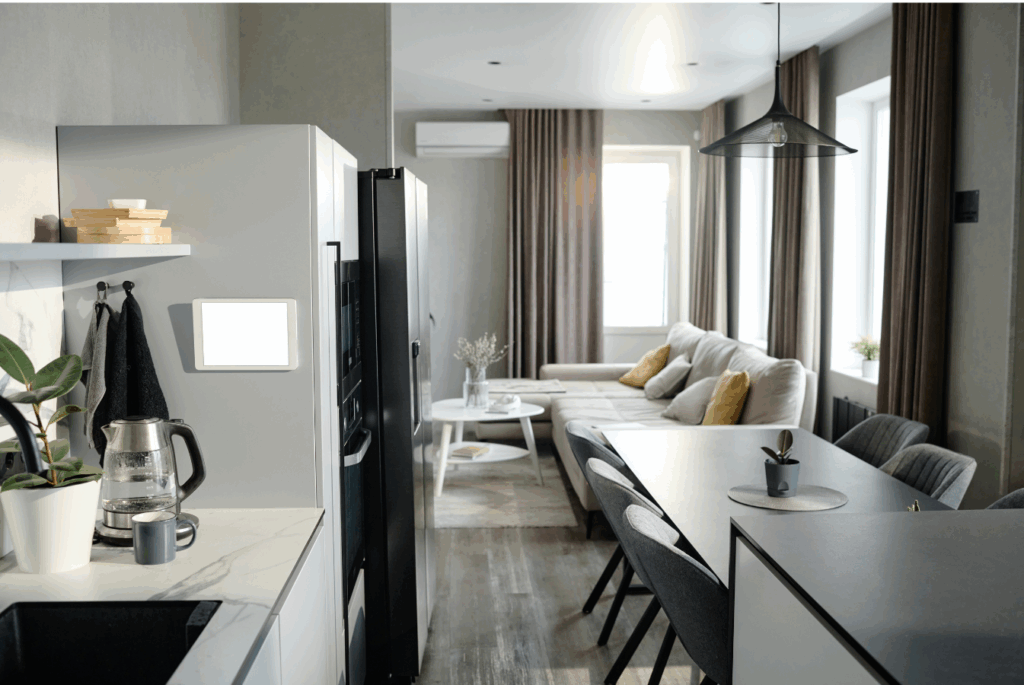
If you live in a new‑build house or an urban flat without a chimney, consider balanced‑flue gas fires or electric fires. Balanced-flue fires, offer high efficiency and can be installed through an external wall. Their glass fronts provide a modern, frameless look and improved safety. Electric fires are even easier to install: they simply plug into a socket. Hang‑on‑wall or hole‑in‑the‑wall electric fires with mood lighting can create a sleek media wall. For the surround, choose polished marble for a contemporary luxury feel or micro marble (a blend of crushed marble and resin) for a seamless, glossy finish.
Period properties and cottages
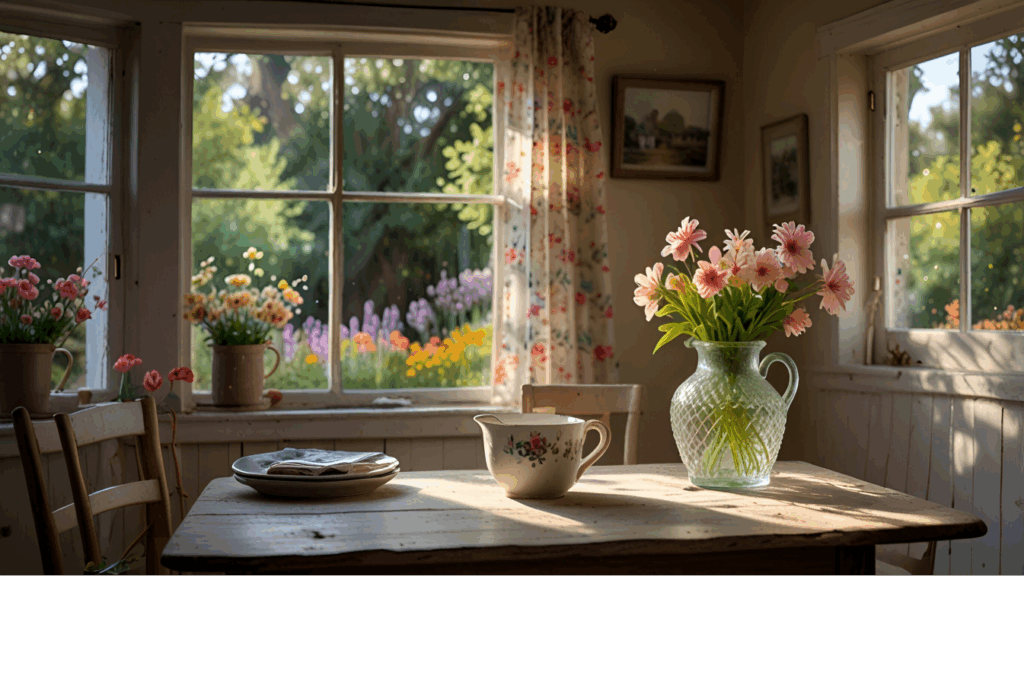
For older homes with chimneys, a wood‑burning stove in an inglenook can provide both heritage charm and modern efficiency. Use limestone or aged oak beams to frame the recess. If you prefer the convenience of gas, a traditional open-fronted gas fire with a classic arch and cast-iron insert retains the look of a Victorian fireplace. However, be aware that open-flame models are less efficient. Marble surrounds with ornate corbels complement period features.
Family homes prioritising heat output
Where heat performance is the primary consideration, such as in open‑plan living spaces, look for stoves and fires with high kilowatt outputs. Balanced‑flue gas fires offer consistent heat and thermostatic control, ensuring rooms do not overheat. Alternatively, select a larger wood‑burning stove from the Fireline or Purevision range, which can deliver in excess of 7kW while maintaining low emissions.

Apartments and small spaces
In compact living spaces, low‑profile electric fires are ideal. Our traditional 16-inch Ecoflame fires fit into standard British fireplace openings and can be used in place of an old gas fire, avoiding major building works. Alternatively, choose a narrow balanced-flue gas fire if you desire real flames and have a wall available.
Key Tips for Installation and Ownership
Consult a professional – always use a qualified installer (Gas Safe for gas, HETAS for solid fuel) to ensure compliance with building regulations and manufacturer clearances.
Check ventilation and flues – ensure there is adequate combustion air for gas and wood appliances. Balanced‑flue fires require sealed pipework; wood stoves need a lined chimney or twin‑wall flue.
Consider future fuel costs – wood is subject to regional availability and must be stored correctly. Gas prices fluctuate but offer instant heat control. Electricity prices can be higher, but they offer 100% efficient use.
Plan the surround – leave sufficient clearance between the fire and combustible materials. When using marble or limestone, the inner chamber may require a heat‑resistant board or metal panel to prevent thermal shock.
Think long‑term – choose a design that will still appeal in years to come. Neutral limestone or marble surrounds with clean lines pair well with multiple fire types, enabling future upgrades.